Friday, June 20, 2014

Operation Spring Fix 14 - Part 1


The staff and cadets of 3045 Army had their final Field Training eXercise (FTX) of the regular training year on the weekend of May 23 - 25.  Cadet corps are required to organize at least three FTXs per year, in order to give cadets the opportunities to apply what they learned in the classroom out in the field.  These areas of study include: map & compass, bushcraft, knots, lashings, first aid, fieldcraft, and leadership.  The skills and lessons learned from FTXs also prepare them for a variety of summer camp courses.
            
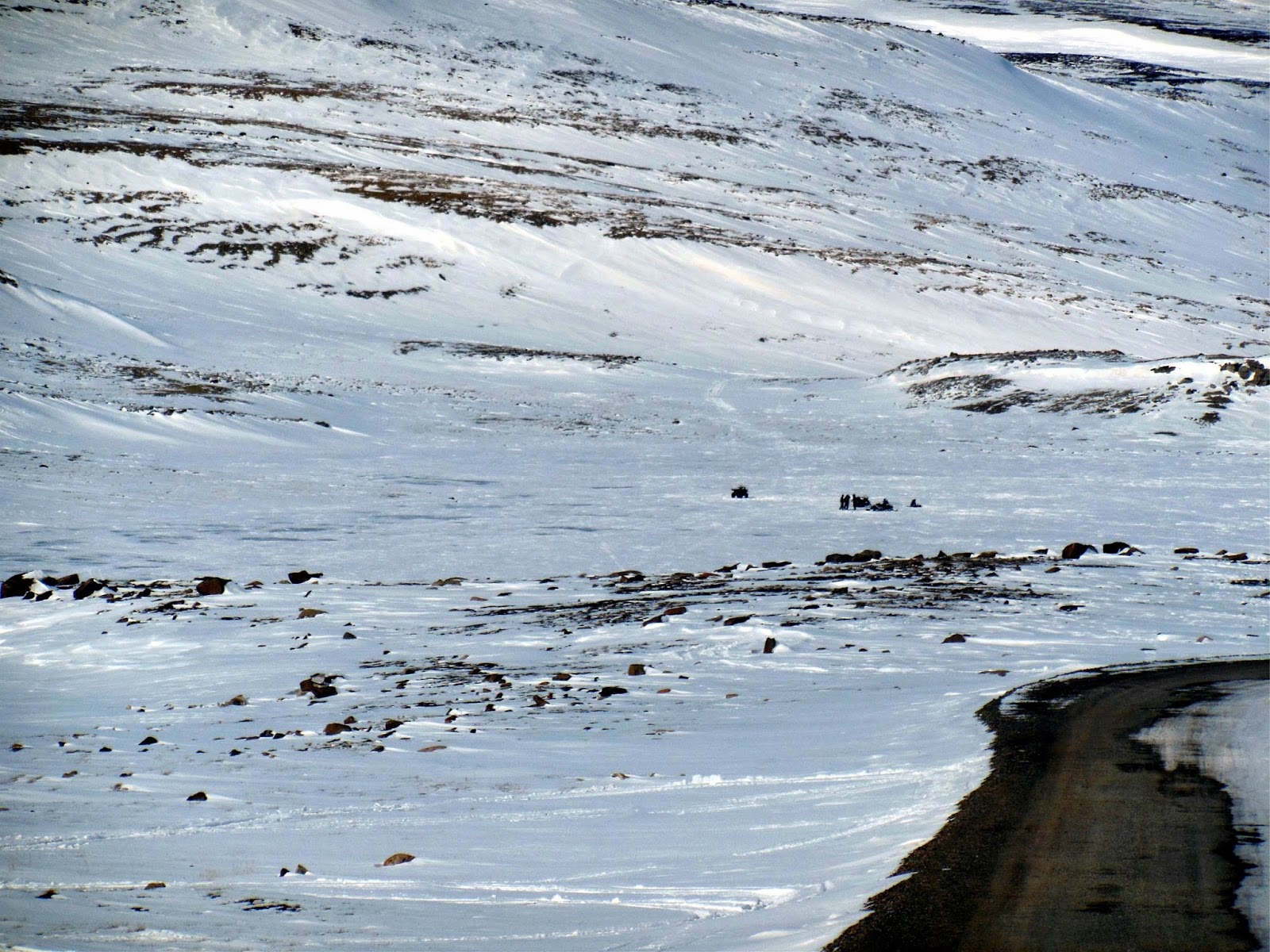
Operation Spring Fix 14 would take place at Qajuutinnguat, a small isolated fishing area 33km to the southeast of Arctic Bay.  It only takes an hour to get there by skidoo.  The Inuit visit the location to ice fish, camp, and hike up the surrounding mountains.  Previous FTXs have been held at Qajuutinnguat but this would be my first time visiting the place.  It would also be the furthest I have travelled out on the land from Arctic Bay thus far.  To ensure a full day of training on Saturday, cadets & staff would travel to the camp site Friday evening, and return Sunday morning.    
            
CO - Lt. May
Planning an FTX requires a lot of time and effort from a collective group of dedicated individuals.  Going it alone is never a safe option.  In early May, the Commanding Officer (CO) assembled his senior staff for a meeting to discuss the necessary preparations and what kind of training should occur.  Using the 5 Ws & 1 H, (Who? What? Where? When? Why? How?), we put together a list of everything we would need (ie. food, warm clothing, tents, sleeping bags, cooking equipment), came up with a training schedule, and decided how many skidoos & qamutiks were available for transportation.  We also contacted two Canadian Rangers to provide protection against possible polar bear attacks.      
            
I was designated the FTX's Officer of Primary Interest (OPI) - the person in charge.  It was my responsibility to make sure everything ran smoothly.  If something went wrong, it would be my fault.  (In military jargon, OPI also stands for "only person interested").  I would also be teaching a class on how to use handheld GPS devices. 
            

Preparations for the FTX kicked into overdrive two weeks before May 23.  With a small platoon of cadets, we collected everything we needed from the storage containers at the gas station and loaded them into the back of a pickup truck.  There were tents, sleeping bags, Coleman stoves, naphtha fuel, American-made Meals Ready to Eat (MREs), and kitchen utensils.  On a regular Wednesday training night, cadets were assigned sleeping bags, air mattresses, duffel bags, and heavy parkas if they needed them.  After that, I had them test the Coleman stoves to see if they were working properly and put up the tents to see if any were broken.  We would be bringing two green five-person arctic tents and one white Fort McPherson tent.  Thankfully, everything was in working order and we stored everything in a storage room until the big day.
            

The Ranger leads the way.
The cadets took their duffel bags home to pack civilian clothing and wash kits.  I did the same but added more things.  I have a habit of packing more than I need because I like to be prepared for most, if not all contingencies.  Even though we would be camping in late May, I decided to wear my Canada Goose Resolute parka, a pair of thick snow pants, and heavy winter boots.  I had no intention of falling ill like I did back in September.  I would later thank myself for making the right choice.  The cadets would also be wearing parkas, snow pants, and boots on this trip, but they were not as thick and heavy as mine. 
            

When the bell rang at 3:35pm on Friday, May 23, I made my way to Inuujaq School's gym where the CO was waiting for me and the cadets who were going on the FTX.  Working as a team, we loaded everything onto the pickup truck and drove down to the frozen ice where the skidoos and qamutiks were waiting.  With the assistance of a Ranger, the cadets emptied the back of the truck and placed everything in the qamutiks.  The general rule for packing a qamutik is to use every bit of available space.  Everyone was dismissed until 1845hrs so they could have dinner at home.  I headed back to school to collect my belongings and got a ride home with the CO.  I changed into civilian clothing, had a quick dinner, and checked to see that everything was packed.  When it was time, I walked down to the ice, fully dressed in winter clothing, with a backpack on my shoulders and carrying a green duffel bag.  I looked like a soldier heading off to war.
            
When all the cadets had assembled, a roll call was taken, and the CO gave a quick briefing.  Everyone hopped onto a qamutik and the skidoo drivers started their engines.  I turned on my SPOT device so it could record my location every 10 minutes.  If anything serious happened to me over the weekend, the device would enable me to call for help. 
            
The long drive began.
            
The convoy drove along the right side of the frozen bay, passing the cemetery and the point where the high western cliffs come to a drop.  We then crossed over and followed the skidoo paths on the left side of the coast, heading southeast, deeper into Baffin Island.  The qamutiks rocked up and down over the frozen ice.  We passed the location where Inuujaq School holds its annual Spring Camp and I photographed the mountain I hiked up last year.  The further we drove, the more taller and majestic the surrounding mountains became.  I think there was a moment when we spotted a seal in the distance, but the black dot disappeared in the blink of an eye.
            

About halfway to our destination, the convoy stopped in front of a large brown & grey rock that was sitting out on the ice, just a few feet in front of a large mountain.  The Inuit drivers concluded that the boulder must have broken off from the top and tumbled all the way down to the bottom.  Looking up at the mountain that was littered with small rocks, I could only imagine the speed at which the large boulder had attained.  If something or someone was in its way, the boulder would have just smashed through.  I snapped a few pictures of the cadets posing in front of the rock before we continued on our journey.
            
We have arrived.
We arrived at Qajuutinnguat after 2030 hours.  The fishing area is hidden between two large sloping mountains.  I photographed them from a distance last year when I was seal hunting during the school's Spring Camp (Part 1 & Part 2).  The sun was still in the sky but concealed behind a thick layer of clouds.  The cadets assembled into two platoons and were briefed by me on where to set up the tents, kitchen area, and fuel storage area.  The female cadets would sleep in a green tent, the adult staff in the other green tent, and the male cadets would share the large white McPherson tent.  The two Rangers had their own white tent to sleep in.  As the cadets set up the campsite, the CO designated two separate areas to serve as male & female washrooms, and the civilian supply officer collected ice in a large grey pot using my machete.  The ice would be melted to provide hot water for hot chocolate.  Once all the tents were pitched and everyone moved their personal belongings into them, a hot chocolate and snack break was called.  There was a gentle wind as everyone drank and ate outside. 
            

While the "night" was still young, the cadets decided to explore the high cliffs surrounding the two fishing lakes.  The CO and I followed closely behind.  The Rangers stayed in camp in case a polar bear paid an unannounced visit.  I left them one of my walkie-talkies so that we could stay in touch.  A river, formed from all the melting snow in the summer, runs through the small lakes towards Admiralty Inlet.  Due to the high cliffs surrounding the lakes, the river generates two waterfalls.  Unfortunately, there would be no falling water to photograph because it was still too cold for the ice and snow to melt.
            

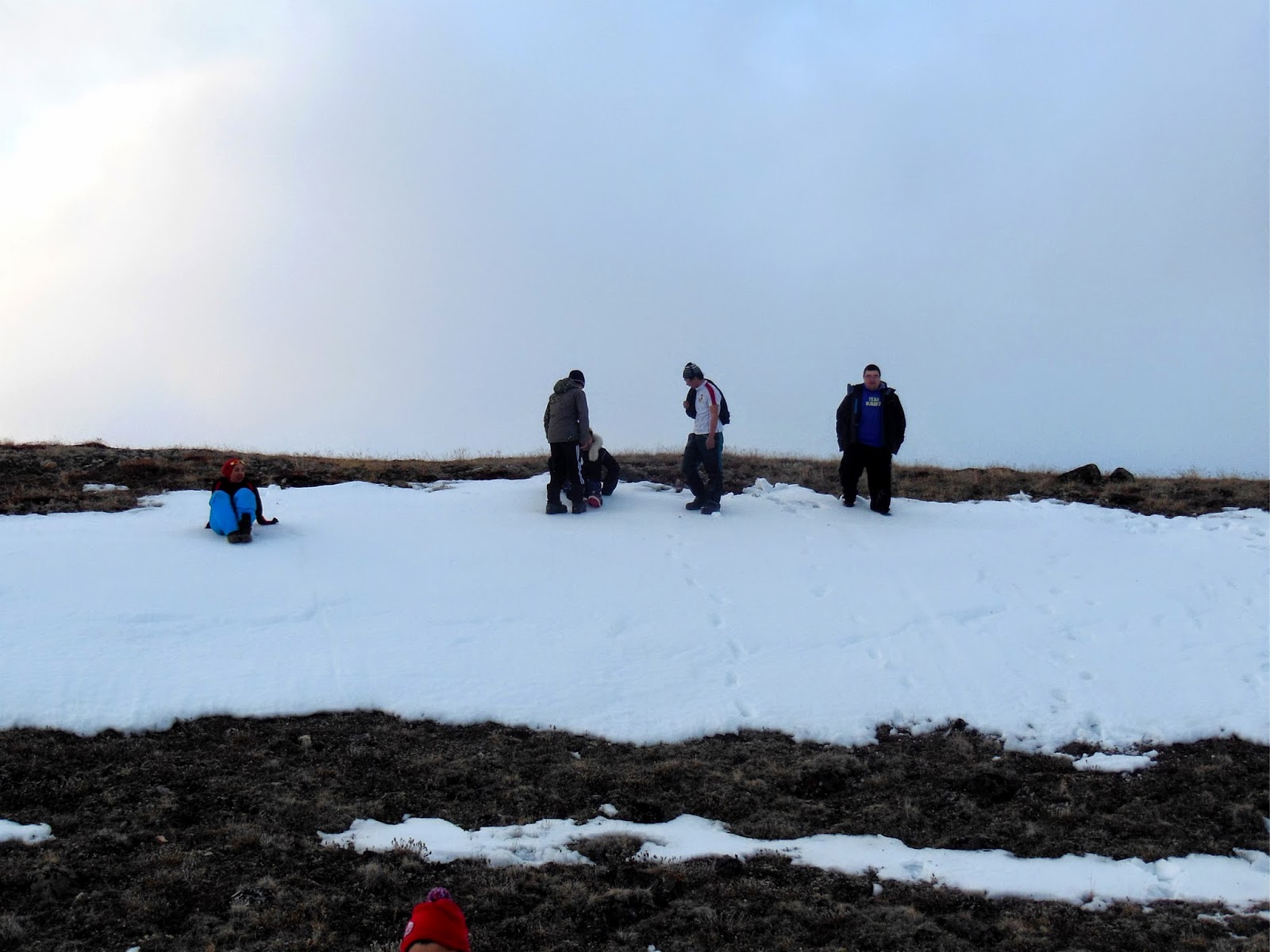
I took plenty of photos of the lakes, cliffs, cadets, and surrounding mountains.  The cadets pointed out a hidden cave and wondered if a polar bear was inside.  Thankfully, there was none.  They also directed me to photograph a few patches of frozen ice that were clear blue underneath.  They explained that the frozen water in those spots were fresh.  After hanging out for some time, we made our way back to camp.  We slid down a hill covered in thick, slippery snow, as a loud formation of snow geese flew above us.  Upon arrival, everyone brushed their teeth and got ready for bed.  Lights out was at midnight.  As I got comfortable in my arctic sleeping bags, I wondered what tomorrow would bring.        

To be continued . . .


Friday, June 13, 2014

Fishing Derby

Road to Victor Bay
The 15th annual Fishing Derby, an extension of Nunavut Quest, took place over the Victoria Day weekend (May 17-19).  Participants and their families travelled great distances by skidoos to fish for Arctic char at the many approved lakes that dot the northern landscape.   One popular fishing spot to the south of Arctic Bay, Ikipikttuarjuk, is 4 hours away by skidoo & qamutik (sled).  Sean, my next door neighbour, travelled to Ikipikttuarjuk for the long weekend to see the fishing area for the first time and fish for fun.            
            
The objective of the derby is to catch the largest fish; for some lakes, it's to catch a fish measuring exactly 12.5 inches.  This year, adults would compete for large cash prizes ($3K max)  while children would compete for electronic devices (ie. iPod Nanos) and gift certificates to the Northern & Co-op stores.  The event also gives people a chance to go camping and unwind from all the "hustle and bustle" of community life. 
            
I decided to stay in town for the long weekend, take a break, and observe people ice fishing at Dead Dog Lake (DDL).  The lake is located just to the left of the road to Victor Bay and is called that because someone found a frozen dog many years ago.  Only small fish reside in the lake.  It was a cloudy day on Sunday, May 18th, when I stepped out of my residence and made the trek to DDL.  I was expecting to see a lot of traffic on the Victor Bay road, but surprisingly there wasn't any.  This led me to assume that most participants were out on the land. 
            
When the frozen lake came into view, I only saw two groups of people fishing.  Each group had a tent, skidoo, ATV, and qamutik.  They had drilled small holes into the ice and were trying to catch fish using fish lines attached to small wooden sticks.  The Inuit call it jigging.  I walked around the lake, taking pictures of the people and surrounding landscape.  A large white sign at the foot of the lake informed me that the lake is an alternate water supply for the town.
            

Arctic Bay - May 18, 2014.
When no one expressed joy in catching a fish, I headed back the way I came, except I took a scenic detour and hiked up the hills to the right of the road.  Since the clouds were clearing up, I wanted to get a few good pictures of the entire town.  Originally, I had wanted to hike up these hills last year but instead, I walked past them and reached the cliffs.  This time, I kept close to the edges and took careful steps.  The snow was still deep and there were plenty of rocks to maneuver around.  The sun came out just as I found the right spot to take wide angle shots of the town below.  The people looked like ants or small seals.  I continued walking until I found a snow covered slope safe enough to slide down.  I slid halfway and then walked the rest of the way.            
            
Community Hall - May 20, 2014
The winners of the fishing derby were announced at the Community Hall on Tuesday, May 20.  I arrived at the C-Hall just after 6pm to see the place packed with people.  I hadn't expected to see four tarps lying on the floor covered with raw Arctic char, caribou, and narwhal.  There was also a big cardboard box containing freshly caught seal.  A community feast would follow the awards ceremony, an element that was absent last year.  On opposite ends of the hall sat rows of tables with fruits and vegetables.  An additional row of tables was set up at the front of the hall for the town's elders.
            
Philip Kalluk - Mayor
I stood off to the side as Philip Kalluk, the mayor, greeted everyone in Inuktitut.  As he spoke into the microphone, volunteers continued dumping more char, caribou and narwhal onto the tarps.  Another volunteer began cutting up the seal in the cardboard box.  Everyone stopped what they were doing when the mayor invited an elder to say a prayer.  Once the prayer was finished, the organizers of the derby took over and began the awards ceremony.
            
Last year, all the fish that were being judged were put on display for everyone to see and photograph.  Unfortunately, that did not happen this year and all the "submitted" catches were judged earlier.  I think the change was implemented to prevent cheating.
            
Fishing Derby organizers announce the winners.
Fresh seal being cut.
The organizers announced the adult and child winners for each lake, calling them up to the front one at a time to be acknowledged by the audience, receive their prizes, and pose for photographs.  The adults who won the large cash prizes were especially happy; some even did a small dance to celebrate.  The kids who won the iPod Nanos were shy and just nodded to the applauding crowd.  As I documented the ceremony with my camera, I noticed one common characteristic among the participants and those who observed them out on the land: their tanned faces.  When Inuit drive skidoos, they wear goggles or sunglasses to protect their eyes, but not much else to protect the rest of their faces.  They like the feel of the Arctic winds on their skin.  This results in getting a serious tan line around the eyes.  They call it "raccoon eyes" whereas the southerners call it windburn.  I always put on sunscreen before heading out on an extended walk outside; I don't like tan lines.     
            
After all the awards were handed out, the word was given that the feast could begin.  People immediately went after the raw meats laid out on the tarps before lining up to get fruits and vegetables.  The elders were served raw meat and freshly cut seal.  If I had known there was going to be a feast, I wouldn't have bought dinner.  When the feast began, I took a few photos and then quietly made my exit.  My dinner was waiting for me at home. 
         
Observing two fishing derby award ceremonies has convinced me to get closer to the action next year in some way, be it travelling to one of the many distant fishing lakes, to actually signing up as a participant.  I might even do both, but it will depend on getting a skidoo, qamutik, and the necessary camping & fishing supplies.  I'll also have to find someone to teach me how to fish the good old fashioned way because I only know how to fish at the grocery store.   


Friday, June 6, 2014

Early May

Amber and her husband Sean.
The month of May began with a going-away party for Amber, Inuujaq School's student support teacher.  She was leaving early to begin her maternity leave and the party was a way for the staff to say thank you for all her hard work over the last two years.  The party took place in the staff room after school on May 2nd.  There were speeches, gifts for Amber, and snacks for everyone.  She thanked everyone for the surprise party, gifts, and for helping her make Arctic Bay home for the last two years.        
            
In the north, expecting mothers in remote communities are strongly encouraged to go down south to give birth, so that in the event of an emergency, the proper medical staff & equipment are readily available.  The Government of Nunavut (GN) pays for the plane tickets and accommodations.  The accommodations are only covered if you deliver in Nunavut.  Expecting mothers leave their communities at least a month before they're due.  In the Qikiqtani region, Inuit women travel down to Iqaluit.  I'm not sure what it is like for women on the Nunavut mainland.  I think they're allowed to go to Iqaluit but they may travel elsewhere.  For Amber, she decided to have her baby in Ontario.  Her husband, Sean, would join her at the end of May. 
             
Inuujaq School staff come together
to thank and wish Amber all the best.
Since April, the sun has been shining 24/7.  Even when it dips below the horizon, the town and surrounding area is still bathed in natural light.  It has been a challenge getting a good "night's" rest because the body thinks it's the middle of the day when in fact, it's the middle of the night.  And it doesn't help hearing skidoos & ATVs driving by and/or children playing outside.  There were a few times when I woke up in the middle of the "night", thinking I was late for work, only to look over at my alarm clock and see that it was 4am.  Sigh.
    
The Project North Team being introduced.
On May 8th, Inuujaq School held its attendance awards assembly for the month of April.  Except this one would be a little different.  As students and teachers gathered in the school's gym, they noticed the presence of out-of-town visitors.  They were introduced by the principal as members of Project North, a "not-for-profit organization dedicated to improving the lives of children in Canada's north" through literacy and fitness/recreation programs.  Also in attendance was Michelle Valberg, an Ottawa based professional photographer, who started Project North in 2009.   Also part of the group were two professional hockey players from the NHL.  (Unfortunately, I have forgotten their names and the team they play for.  I think it was the Florida Panthers?)  

Valberg and her team were in Arctic Bay to deliver 25 bags of new hockey equipment to Inuit youth.  Each bag contains enough equipment and apparel for one player or goalie.  Some of the items that are included are: skates, stick, gloves, jersey, helmet, pants, and safety cup.  A complete Player Bag costs $1000, while a Goalie Bag costs $1950.       
            
Innujaq School dances.
After the introductions and speeches, the Project North team stepped aside, and along with everyone, congratulated those students who achieved perfect attendance for the month of April.  The team took centre stage again to lead Inuujaq School in fulfilling a small request from Project North's travelling cameraman.  He needed video footage of the students dancing.  (Don't ask).  I quickly made my exit from the gym and went up to the mezzanine to take photos of the spectacle.  When the music stopped, the K-6 classes returned to their classrooms.  The middle & high school classes stayed behind for a short Q&A session with the NHL players.
            
In the evening, Project North held a hockey game event at Dead Dog Lake, near the road to Victor Bay.  It was a chance for the community to come out, play some hockey, and watch the kids try out their new hockey equipment.

As a final contribution to the youth of Arctic Bay, Valberg held a two-day photography workshop for eleven high school media students.  They each received a free digital camera for their participation.     
            
Perfect high school attenders for the month of April.
Q&A Session.
With just one month left in the semester, teachers knew there was little time to teach any new topics.  For us high school teachers, close to half of the month would be devoted to review and exams alone.  Originally, the school's spring camp was scheduled for the second week of May, but the upcoming fishing derby forced administrators to postpone the camp until the first week of June.  (More on these events in future posts).  This also meant high school exams needed to be written a week earlier.
            
Inuujaq School dances even more.
In Grade 10 English, my students finished watching the movie Stand and Deliver, and completed all the accompanying activities.  Despite the film being set in the 1980s, my students enjoyed the story and the characters.  They were reminded that there would be film-related questions on the final exam.  The last module of the semester was paragraph/essay writing.  The module would teach them how to use a paragraph as a way to develop an idea and/or point of view.  I knew it would be a challenge because my students would be writing in English, their second language.  Of course, they would be required to write a paragraph on a given topic on the final exam.
            
The hockey players giving free Hi-Fives.
In Grade 10 Social Studies, we continued with the Residential School Module.  This learning resource was recently developed to educate students about the Canadian residential school system, and how it affected Inuit, Metis, First Nations, and Aboriginal children all over Canada between 1831 and 1996.  We began by looking at Inuit life before residential schools, how education was acquired through life experiences and not in classrooms.  Parents were the teachers of children and they taught their children how to survive out on the land.  We then moved on to what it felt like to be forcibly taken away from your parents and put in a white-man's school far away from your homeland.  From the personal accounts we read and listened to, it wasn't nice and it led to many negative repercussions.  At the time, the federal government believed that the ways of life of all Aboriginal/Inuit groups were inferior and felt the only way to "improve their standard of living" was to forcibly assimilate them into the dominant culture. 
           
And finally, once my guitarists understood how to read and interpret accidentals (flat, natural, & sharp), we moved on to power chords, palm muting, bass runs, and major scales.  We had a lot of fun.

May 12, 2014

Sunday, June 1, 2014

Rankin Inlet Skills Competition - Part 3

A True Underdog Story
            
Simon Alaittuq School
Sunday, April 27th was the last day of the skills competition.  After breakfast, everyone cleaned their rooms and packed their bags.  The cadets then changed into their physical training (PT) gear and were driven to Simon Alaittuq School for the volleyball tournament.  The Commanding Officer (CO) of 3055 would referee all the games.  No one had an issue with this because he was more experienced in running sports tournaments, especially with an odd number of teams.  There would be five rounds.  Rounds 1 to 3 were played in a round robin style; each team would face their opponents twice.  Each round was played to the best of three games.  Rounds 4 & 5 were the semi-final and final games.  To win a game, a team would have to attain 15 points with a two point lead. 
            
The first round was played between Arctic Bay & Repulse Bay.  As the cadets served, received, passed, and spiked the ball back and forth, I stood on the sidelines taking pictures.  The Rankin Inlet cadets cheered for both teams.  Unfortunately, both games did not go well for my cadets and they lost by several points. 
            
Repulse Bay advanced to the Second Round, facing off against Rankin Inlet.  I instructed my cadets to study the plays of the other two teams; maybe there were weaknesses to exploit and strengths to avoid?  After many close calls, Rankin Inlet came out on top, winning both games just by a few points.  Judging from the first two rounds, I concluded that 3019 Rankin Inlet was the strongest team.             

Rankin Inlet vs. Repulse Bay
Arctic Bay returned to the court for Round 3, going up against Rankin Inlet.  I was right in my previous assessment of 3019 because they gave 3045 "a beating".  The ball just didn't go ARB's way and we lost both games by large margins.  The points we scored just weren't enough.  At the end of the round robin, Arctic Bay was in last place, Repulse Bay was in second, and Rankin Inlet was in first.      
            
Cadets of 3045 & 3055 Army.
Cadet Reid, J. of 3045 Army
A short break was called to give cadets a few minutes to go to the washroom and drink some water.  It was obvious that my cadets look dejected after losing four games straight.  Now we were faced with elimination in the next round.  They had been practicing a lot back home but something wasn't working.  I wished I had watched more sports movies to be able to give one of those awe-inspiring speeches when the team is in trouble.  Before I could pinpoint the cause, the referee blew his whistle to signal the start of Round 4 - Arctic Bay vs. Repulse Bay.  The winner would face Rankin Inlet in the final.  Setting my camera aside, I stopped my team captain and spoke just loud enough so the rest of the team could hear me.  "This is it.  We lose, we go home."  After a short pause, I added, "Now show them how we play in Arctic Bay."
            
Rankin Inlet vs. Repulse Bay
Cadet Olayuk, J. of 3045 Army
This time, I paid more attention to the game and gave more advice to my players.  I assumed the first game would be close, in terms of scoring, because both teams were "fighting for their lives".  I assumed correctly because Arctic Bay won the first game just by a two-point lead.  My cadets no longer felt dejected; they were now feeling like they had a chance.  "Just one more game," I reminded them, "and we're in the final."  The second game went a lot better; their coordination and passing had improved and they won the second game with a five-point lead.  Their frowns were now upside down.  3045 Arctic Bay was advancing to the finals.  I think we're in for an upset, I thought.
            
The faces of the Rankin Inlet team were of confidence but also concern.  Arctic Bay was clawing its way back to the top.  The team that lost its first four games would be facing off against the team that won its first four games.  Both ends of the spectrum, vying for first place.  I think the faces on my cadets read, "Guess who's back for more."
            
Arctic Bay vs. Repulse Bay in the Semi-Final.
The first game of Round 5 began.
            
Cadet Qaunaq, R. of 3045 Arctic Bay.
The game was fast, tense, and loud.  Several rallies lasted for nearly a minute and the audience was cheering for both teams.  It wasn't until the later half of the game that Arctic Bay got a solid lead and won 15 to 9.  The mood among 3045 was the complete opposite of what it was before.  Their morale was riding high as they were now just one game away from claiming first place.  I did my best to contain my excitement.  "Just one more game," I told them.  "Just one more game, and we take home the gold." 
            
Cadet Lavallee, C. of 3045
Arctic Bay.
The second game was the same as the first: fast, tense, and loud.  I paced back and forth along the sidelines, watching my cadets serve and receive the ball.  I wanted to jump in and help them bring home the gold but that would have led to a disqualification.  Either through hard teamwork and/or overconfidence from Rankin Inlet, my cadets got a solid lead in the second half of the game and managed to win again, 15 to 9.  We were ecstatic while everyone else was stunned.  The underdogs had started from the bottom but were now here, in first place.  "Good work," I said, while slapping high fives.  "Good work indeed."  After 3045 shook hands with 3019, all three teams gathered on the court for a group photo.
            
3045, 3055, & 3019 Army Cadet Corps.
The other Welcome Sign at the PAB.
Everyone returned to the PAB to finish packing their belongings and cleaning the rooms & washrooms.  Duffel bags, suitcases, and air rifles were brought down to the first floor and organized into neat piles.  We made sure to leave no trace of garbage behind.  When the cleaning was done, everyone assembled in the mess hall to hear the final verdict on who won the skills competition.  So far, the only assured fact was that 3045 Arctic Bay won the volleyball tournament.  Before announcing the winner, the officer-in-charge asked the cadets if they had fun.  The answer was a resounding yes.  When asked if they would attend a skills competition next year, if one were held, everyone again answered yes.  He assured the cadets that he would relay those answers to his superiors so that such events in the north would continue. 
            
Medical Inspection Room (MIR) at
the PAB.
The Department of National Defence has been facing budget cuts for the last few months because the federal government has been trying to curb deficit spending.  All government departments are not immune to the cuts.  The cadet program is usually the first on the list to receive them.  As a result, programs and events, such as skills competitions, are cancelled and/or postponed indefinitely.
            
Rankin Inlet Inukshuk
The officer-in-charge continued by announcing the individual winners of the 4 events.  3019 Rankin Inlet won the Marksmanship event; it was pretty obvious from the start because they had hometown advantage.  They also won the Drill event.  I was surprised to hear that 3045 Arctic Bay won the Leadership Tasking.  Since we won volleyball, that meant we were tied with Rankin Inlet.  Because there was a tie, the officer-in-charge had to look at the point system more closely, and it turned out that just on points, Arctic Bay had just a few more than Rankin Inlet.  My skills team had won the competition.  They reacted with whistles and cheers.  Looks like we'll be bringing back some really good news, I thought.
             
After the debriefing, it was time for 3055 & 3045 to head to the airport to catch their chartered flight home.  Final goodbyes were exchanged with the cadets & adult staff of 3019 before the trucks were loaded with everyone's belongings.  The drive to the airport terminal was very short because the PAB sits just on the other side of the runway.  As the cadets were unloading the trucks, I noticed the wind was not as strong as it was in the morning.  That was a good sign because I did not want to get stranded.  Once everything was checked in, both teams waited for an hour until all the other flights left.  When we were called to board, I said my final goodbyes to the officer-in-charge.
            
Rankin Inlet Airport Terminal
The flight to Repulse Bay was uneventful.  Most of the cadets were tired from the competition and slept.  When the plane landed, everyone had to disembark so that the aircraft could be refueled, restocked, and cleaned.  My cadets said their final goodbyes to the cadets of 3055 before boarding.  I was the last one to board; I did not want to leave anyone behind.  The final three-hour flight home passed in a blur.  When we landed in Arctic Bay, there was a crowd waiting for us in the terminal.  We all shared the good news.  The parents were overjoyed and the Commanding Officer was surprised. 
            
"I didn't think it would go that well for you," he commented.
"Neither did I," I added.
            
Overall, the 2014 Rankin Inlet Skills Competition was a lot of fun.  My team came together and succeeded in achieving first place.  The event gave me the opportunity to travel to the Nunavut mainland and visit other northern communities.  I hope there will be a skills competition next year: 3045 now has a title to defend.   


End of Rankin Inlet Skills Competition Mini-Series