Wednesday, October 7, 2015

Conference & Sports In Iqaluit

Downtown Iqaluit.
At the beginning of the school year, I volunteered to be the school's Professional Development (PD) coordinator.  One week in February is given to teachers for the purpose of completing an activity and/or course of some kind that benefits them as a teacher and their students.  (The week is referred to as PD Week).  My duties are to assist the teaching staff of Inuujaq School in selecting those activities and/or courses, getting the applications approved by the Nunavut Teachers Association (NTA), make sure the teachers receive adequate funding from the NTA, and submit substantiation report after PD Week.  It is possible for Nunavut teachers to complete their PD outside of the territory but the application process is more rigorous and competitive.
            
Barges. Iqaluit.
Since this was my first time being the PD Coordinator, I was required to attend a training conference in Iqaluit in early October.  This conference would also host training workshops for teachers that were selected as NTA school representatives.  Inuujaq School's NTA Rep is Jean-Francois (JF), the high school math & science teacher.  We prepared five days worth of teaching plans for the supply teachers and wrote up separate lists of things we wanted purchase in the "big city". 
            
It was a foggy September 30th day when JF & I were driven to the airport by Frank, the former mayor of Arctic Bay.  JF & I were excited to be travelling to Nunavut's capital on a business trip.  The NTA paid for our plane tickets & hotel accommodations.  We were met by two high school female students who were also travelling to Iqaluit for a territorial soccer tournament.  The rest of the girls team would travel with the boys team the next day. 
            
We were disappointed to hear the announcement from the check in clerk that the First Air plane from Resolute would not be landing in Arctic Bay due to mechanical trouble.  The plane would continue on to Iqaluit.  The next available flight was the following day.  JF & I began to wonder whether it would be worth travelling to Iqaluit at all since that flight was already full.  We held our heads high and went back to work.  At the end of the school day, JF informed me that First Air had flown up a spare turboprop from Iqaluit to transport the stranded passengers.  We immediately said our goodbyes to everyone again and headed back to the airport with our packed belongings.
            
The packed First Air plane lifted off into the late afternoon sky at 5:30pm and flew towards Iqaluit.  Everyone was relieved that First Air flew up a spare plane.  The stewardess began handing out copies of Nunavut News North as the plane leveled off.  Everyone was surprised to see three members of the girls soccer team on the front page.  Two of them were on the plane.  The photo was taken at the prom fundraiser that the team had organized to raise money to pay for the trip.  The two girls on the plane autographed several newspapers.  JF & I commented to them that they would be celebrities for the next little while. 
            
Iqaluit Airport.
I met several teachers at the Iqaluit airport while I was waiting for my suitcase.  They had arrived from Igloolik & Hall Beach.  JF & I proceeded to our first order of business, buying a shawarma at the local Yummy Shawarma restaurant.  We then hailed a taxi to give us a lift to the Frobisher Inn.  Hard copies of  Nunavut News North were displayed all over the lobby.  Some teachers were booked at the Hotel Arctic near the Four Corners Intersection.
            
Iqaluit's new Aquatic Centre under construction.
Iqaluit
JF & I woke up on October 1st and headed down to the movie theatre for the start of the conference.  The NTA had booked the movie theatre for the first half of the conference.  Surprisingly, this was my first time seeing the inside of the only movie theatre in Iqaluit.  I never went to see a movie when I lived in Iqaluit in 2012.  There is a ticket booth, concession stand, and two viewing rooms.  All the teachers attending the conference came from communities in the Qikiqtani Region.  We were welcomed by Terry Young, NTA President, and several PD coordinators based in Iqaluit.  Everyone broke off into two groups: the NTA Reps stayed in the movie theatre while all the PD teachers moved to one of the newly built conference rooms.  To build the two conference rooms, the Frobisher Inn had to get rid of the old swimming pool.
            
Around this time, I heard that a large snowstorm had arrived in Arctic Bay, forcing the cancellation of the morning flight out of the community.  The boys soccer team and remainder of the girls team could not make it to Iqaluit.  JF & I were surprised to hear that school had been cancelled for the first day of October.  We were glad that we flew out the day before.  
            
By the end of the day, news emerged that teams from Kugluktuk, Gjoa Haven, Kugaaruk, and Igloolik could also not send their teams down to Iqaluit because of a lack of flights and weather.  CBC News North published an article about the difficulties on its website on October 2.
            
Houses on a hill. Iqaluit.
The training conference lasted for two days (Oct 1 - 2) and was very informative.  I could spend one or two blog posts writing about every detail but I'll keep this post short & to the point.  I learned everything that I needed to know about being a school PD Coordinator, including how to work the registration website.  I also got to network with teachers from across the Qikiqtani Region.  Snacks were provided by the Frobisher's Inn catering service.  We were served fruit, muffins, coffee, water, and tea. 
            
ARB soccer team.
On the evening of October 2, JF & I went to the Arctic Winter Games (AWG) Arena to watch the girls soccer match between Arctic Bay & the Iqaluit high school.  Since there were only two girls from Arctic Bay, the remaining roster was filled by the girls soccer team from Aqsaarnit Middle School.  The two teams played on the arena's hockey rink which had been converted into a temporary soccer field using turf.  I found a seat in the middle of the bleachers, took out my digital camera and filmed the entire match.  Only one goal was scored and it was done by the two girls from Arctic Bay.  When the referee blew the final whistle, the Arctic Bay team celebrated their win in the middle of the field.  It would be the only game we could see because the tournament schedule conflicted with our training schedules.  In the end, the Arctic Bay team did not win the tournament. 
            
Everyone assembled in one of the conference rooms on October 3 for a two-day workshop organized by the Red Cross.  The focus of the workshop was anti-bullying, suicide prevention, and how to deal with trauma in students & teachers.  The workshop was delivered in the form of lectures, group activities, and videos.  There was a part where teachers were allowed to share any personal stories of their struggles with the topics mentioned above.  Some of the stories that were shared were quite shocking.  We were also given free resources to take back to our schools.  What I liked about the resources was that they were Nunavut oriented.  Even the anti-bullying videos were filmed in Iqaluit. 
            

NTA President - Terry Young.
We were all treated to an evening banquet on October 3 as a thank-you-for-attending from the NTA.  We had the Gallery Dining Hall all to ourselves.  The buffet tables were set up against the far wall and there even was a cash bar!  Being a Nunavut teacher certainly has its benefits.  The emcee for the evening was NTA President Terry Young.  He began his speech when everyone was seated.  What was most impressive was that he correctly named every teacher in attendance and thanked them for being in Iqaluit.  (There were at least 40 of us.)  He also announced Becky Tootoo as the recipient of the 2015 NTA Award for Teaching Excellence.  She teaches at Jonah Amitnaaq School in Baker Lake.  She received a certificate and a plaque for her tireless efforts in educating Inuit youth.  
            
Prime Rib dinner.
We filled our plates with vegetables, salads, soups, bread, and the main course, prime rib.  The piece I took occupied half my plate and yes, I did eat all of it.  I was glad I chose to forgo lunch that day.  I still had room to fit in a little dessert.
            
My trip to Iqaluit was not confined to the conference rooms at the Frobisher Inn.  I used my spare time to photograph the territorial capital and buy school supplies at Arctic Ventures and Tittaq Office Products.  Long gone are the days of Arctic Ventures playing annoying music to keep loiterers away from the main entrance.  I also bought several educational DVDs from the local video store.
            
New terminal under construction.
Damaged roof section.
I took a stroll down Federal Road one afternoon and took pictures of the town's industrial area and the new airport terminal being constructed.  I wanted to get a good look at the damage done to the terminal's roof.  The section that was damaged by fire in early September looked charred black and the metal tiles were crumpled.  A large Hercules transport aircraft, belonging to the Royal Canadian Air Force, happened to be parked on the tarmac next to the new terminal.  I snapped a picture before walking back to the town centre.
            
Hercules transport plane.
Iqaluit
The last day was October 5th.  I went to NorthMart in the morning and filled a cardboard box with frozen food that are not frequently sold in Arctic Bay.  The prices weren't cheap either.  JF & I took a taxi to the airport from the Frobisher Inn.  The vehicle was packed with our suitcases and extra boxes of food and school supplies.  After checking in our bags, we bought our last shawarmas at the Yummy Shawarma restaurant.                           
             
Iqaluit Airport Runway.
The flight to Arctic Bay was delayed by an hour.  I passed the time showing teachers pictures of me extreme ironing on King George V Mountain.  The passengers were driven to the awaiting turboprop by bus.  As the plane was taxiing to the runway, we were informed that a Russian airliner had landed in Iqaluit due to a medical emergency.  I was able to snap a clear photo as our plane flew down the runway.

            
Russian airliner that had to land in Iqaluit due to a medical emergency.
The flight was mostly uneventful until the last few minutes.  The captain informed everyone that there was a chance he wouldn't be able to land in Arctic Bay due to low clouds.  If this was the case, then JF & I would have to spend a night in Resolute.  The plane descended beneath the clouds and then made a wide u-turn to the right.  The plane landed safely on the gravel runway.  The Iqaluit trip was a success.  We were driven into town by Frank.

Cargo Jet in Iqaluit.

Saturday, October 3, 2015

Operation Hill Top 15


The first Field Training eXercise (FTX) of the 2015-16 regular training year occurred on the weekend of September 25 - 27.  Cadets corps all over Canada are required to organize at least three FTXs every training year.  FTXs - the cadet program's equivalent of a school field trip - give cadets the opportunity to apply the knowledge and skills they've learned in the classroom out in the field.  This particular FTX was geared towards the first and second year cadets because one of their training requirements is to complete a 7km hike.
            
Operation Hill Top 15 - as the FTX was called - was originally scheduled to take place the weekend before but had to be postponed due to bad weather.  This was the second event the corps had to postpone due to weather.
            
Planning & preparation for the FTX had begun several weeks before.  Equipment lists and a training schedule were drawn up at a senior staff meeting.  I taught several wilderness survival classes on a Wednesday training night, and senior cadets showed the first & second year cadets how to pack sleeping bags & rucksacks.  The senior cadets also checked the Coleman stoves to make sure they were properly working.
            

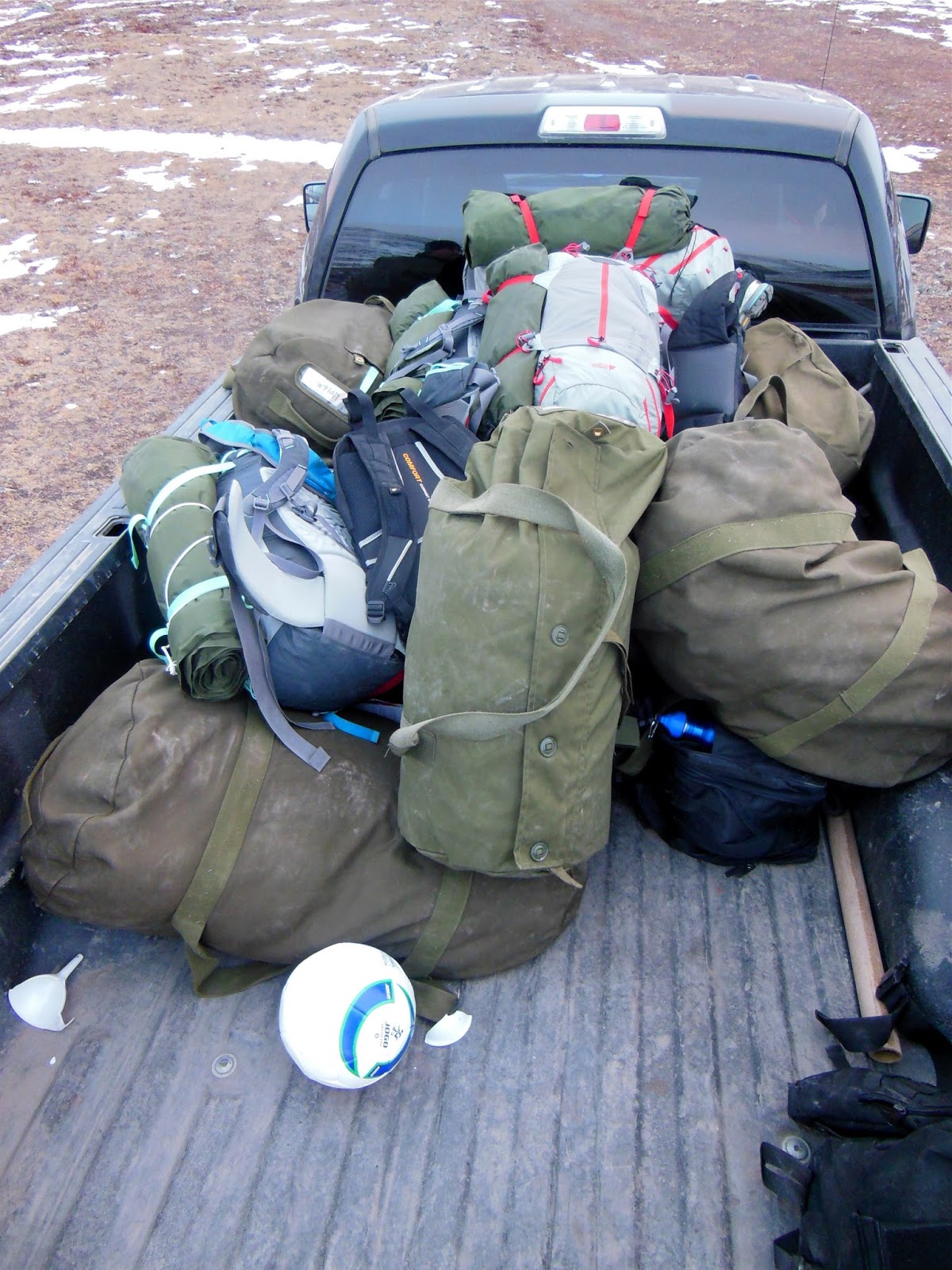
We all assembled in front of Inuujaq School's gym, packed & ready for adventure, on Friday, September 25th, at 6pm.  A roll call was taken and then the cadets loaded their duffel bags & sleeping bags onto a pickup truck.  Camping supplies were loaded onto another pickup truck.  We drove out to the camping area in a convoy of pickup trucks and SUVs.  I drove one of the pickups.  We arrived at our destination after a thirty-minute drive: the Second Bridge.
            
The Second Bridge is the name given to one of two metal bridges that are part of the Road to Nanisivik.  For those of you who have forgotten, the Road to Nanisivik is currently Nunavut's longest road at 32km.  Everyone up here usually says that the Second Bridge is the halfway point between Arctic Bay and the old Nansivik Airport which is no longer in use.  3045 Army Cadet Corps has used the area next to the bridge as a camping ground for the last several years.
           
I was expecting to see a lot of snow on the ground because the Second Bridge is located in the mountains.  Surprisingly, there wasn't that much snow, and we could still see the ground. 
            

A white Fort McPherson tent had already been pitched by the commanding officer, Lt. May, and a civilian instructor that morning.  The tent happened to be the new one that was sewn by local elders.  Inside I found the remaining tents that needed to be pitched, the Meals-Ready-To-Eat (MREs), and the Coleman stoves.
            

The cadets immediately went to work pitching two white Fort McPherson tents and one green Arctic tent.  Rocks were collected to act as anchors for the canvasses and ropes.  Once all the tents were up, the cadets were instructed to move in, setting up their air mattresses & sleeping bags.  The male cadets occupied two tents and the females had a white tent all to themselves.  I chose to sleep in the white tent that was designated as the supply/mess hall tent.  The commanding officer warned me that the new tent didn't have an inner liner, but I reassured him that I would sleeping inside two army sleeping bags at night.
            
I was the Officer of Primary Interest (OPI) for this FTX - aka the Officer in Charge.  When the camping site was set up, Lt. May bid me good luck and drove back to town.  I had a civilian instructor and a female Ranger for adult supervision.  Everyone was sent to bed after a short hot chocolate break.
            

Morning reveille
Reveille was at 0730hrs on the morning of Saturday, September 26.  The supply/mess hall tent was tidied up and a Coleman stove was brought in.  Snow & water were collected in large grey pots and boiled on the stove.  The breakfast MREs took about 15 minutes to cook.  Rations are served starting at the bottom of the chain of command - junior cadets to officers.  I was the last one to eat.
            
I taught three classes after breakfast: the five elements of survival, the seven enemies of survival, and proper radio communication procedures.  To survive in the wilderness you need (positive) attitude, shelter, water, fire, and food.  The enemies of survival are pain, cold, thirst, hunger, fatigue, boredom, and loneliness.  During the radio communication lesson, the cadets reviewed the phonetic alphabet, call signs, and proper radio phrases.
            
Soccer
The cadets played a game of soccer for the rest of the morning.  The land on the other side of the road is quite flat and not that rocky.  We used construction pylons to mark the boundaries and goal posts. 
            

Lt. May visited the camp site at lunch time to see how well I was coping with the cadets.  He commented that I was doing just fine as an OPI.  Preparing and managing lunch followed the same routine as breakfast.  The only difference was the meal packages. 
            
Lt. May held a short briefing with the senior cadets & I after lunch.  We discussed how the 7km hikes would proceed in the afternoon.  The first year cadets would proceed towards the First Bridge, led by the civilian instruction.  I would lead the second year cadets towards the old Nanisivik Airport.  My cadets were required to walk with their rucksacks.  Both groups would take juice boxes, granola bars, toilet paper, and garbage bags.
            

Second year cadets.
Both groups left the camp site at 1:30pm.  I assumed it would take us about three hours to complete the hike.  We would walk 3.5km out and 3.5km back.  I was able to take several landscape photos of the camp site and surrounding area once my group reached the top of the first hill.  We followed the Road to Nanisivik.  There were only a few places where the wind was strong.  Lt. May drove back and forth in his pickup truck, checking on the well-being of both groups. 
            
When we reached the halfway point, four of my cadets decided to walk an extra kilometre.  I agreed to let them walk an extra 500 metres before turning around.  While they went the "extra kilometre" I led the other four cadets back to camp.  When there was a break in the clouds, I took a picture of the arctic sun shining brightly over the rocky landscape.  The other group had walked 7km out and were driven back to camp in Lt. May's pickup truck.
            

Dinner was at 1700hrs (5pm) and consisted of more American-made MREs.  The Canadian-made Individual Meal Packages (IMPs) aren't being supplied to cadet corps because the Canadian Armed Forces have priority.  That's unfortunate because most cadets prefer IMPs.  Around this time, Lt. May drove back to Arctic Bay for the night.  He instructed me to burn all the firewood at the evening bonfire.  I happily obliged.  He would return the next morning with several adult volunteers in vehicles to drive everyone back to town.
            

The evening bonfire began at 8pm.  The wood we were burning was part of the large pile the cadets collected from the shoreline cleanup at the beginning of the month.  The only challenge we had was lighting the kindling.  Thankfully, we had naphtha fuel.  When the fire truly became a bonfire, we broke out the marshmallows, hot dogs, and juice boxes.  We all enjoyed roasting marshmallows and hot dogs over an open fire.  I snapped many pictures of the occasion and even took a selfie.  I also took a picture of the full moon.  The bonfire lasted for 90 minutes and was extinguished using snow.  Everyone retired to their respective tents and went to sleep at 2230.
            

Sunday, September 27th was all about tearing down the campsite.  When the cadets woke up, I instructed them to immediately roll up their sleeping bags and air mattresses.  They then cleaned out their tents after breakfast.  Everyone took turns warming up inside the supply tent because the wind was quite cold.  When Lt. May arrived later that morning, we began disassembling the tents.  The cadets also did a garbage sweep of the camping area.  The cadet program teaches cadets to leave a camping area better than it was before and make it appear as if you were never there to begin with. 
            
When the teardown was complete, the cadets were formed up, and Lt. May & I held a quick debriefing.  We commended everyone for completing the 7km hike and for not causing any problems for the OPI.  When the adult volunteers arrived in their vehicles we divided the cadets among the convoy of pickup trucks and SUVs.  On the drive back to Arctic Bay, I photographed a lone iceberg near Admiralty Inlet.   


Tuesday, September 29, 2015

Anti-Bullying Week


Inuujaq School's Safe School Committee organized an Anti-Bullying Week from September 21 - 25.  The committee distributed a list of activities they prepared to teachers that focused on how to identify, stop, and prevent bullying in & outside of school.  Teachers were encouraged to complete the activities that applied to their respective classes.
            
Some of the activities included: Pink t-shirt Anti-Bullying Pledge, Elder & RCMP Visits to classrooms, and the "Caught you Caring" Campaign.  The school's main hallway became filled with coloured pink t-shirt posters with statements, such as, "I will take turns sharing toys," "I will stand nicely in line," and "I will tell a teacher is I see bullying happening."  Elders spoke to all students about the negative effects of bullying and how to stop &  prevent it.  The "Caught You Caring" Campaign saw teachers handing out "I Caught You Caring" cards to students who behaved in a thoughtful & caring manner towards teachers & peers.   
            
The main event was the Safe School Artistic Challenge.  Classes could prepare an anti-bullying short film, song, poster(s), or skit and present it at the assembly on the 25th.  The winning classes would receive $80.
            
My high school classes watched the 2011 documentary BullyThe last time I played the movie was two years ago.  The film was controversial upon its release due to its shocking content.  We were all shocked by the types of bullying that were recorded on camera.  The film generated classroom discussions on what kind of bullying happens in the community. 
            
Bullying is a problem in Arctic Bay, like anywhere else in the world, and it occurs in & around the school.  Cyber bullying is a particular concern, especially with social networking sites like Facebook.  We talked about how to confront bullish behaviour using non-violent means, such as talking to a teacher, parent, elder, principal, and/or the RCMP.           
            
I also displayed an "Incident Reports by Province" pie chart from the Stop A Bully website.  Stop A Bully is "a registered national charity and Canada-wide anti-bullying program developed in 2009, [that] allows any student to safely report [incidences of bullying] to school officials."  Unfortunately, the pie chart did not provide statistics from the three territories.  This absence of information prompted many students to guess how many bullying incidences are reported in the north.  What was also emphasized to students was that there are many bullying situations that go unreported. 
            
My students were surprised to learn that I had six bullies in high school: 3 in Grade 9, 2 in Grade 10, and 1 in Grade 11.  I didn't go into details as to how I survived those three years in high school.  All I added was that I didn't use physical force of any kind.
            
Greg & Geela
Friday's assembly began at 1:30pm after lunch.  The gym was packed with teachers, students, elders, parents, and community members.  The chair of Safe School Committee, Greg, addressed the audience, welcoming them to the first anti-bullying assembly of the year.  The Inuktitut translations were done by Geela, a student support assistant.  The community's two RCMP officers were the first presenters, giving a talk about various types of bullying and how the RCMP can help victims of harassment.  What I liked was that the officers explained to everyone that bullying in Canada can lead to criminal charges if they fall into the following categories: threats, criminal harassment, distribution of images without consent, and assaults.
            
Safe School Committee.
The Safe School Committee was called up to the front of the gym to be thanked everyone for making Anti-Bullying Week possible and for organizing the assembly.
            
The best was saved for last: the Artistic Challenge.  Everyone was eager & excited to see what each class came up with. 
            
Kindergarten
Grade 3
Grade 4
The Kindergarten class made a music video about wanting a safe school.  The video was shown on one of the gym walls using a projector.  The Grade 1 & 2 classes made posters and had them pasted all around the gym.  The Grade 3 class did a live performance, singing an Inuktitut song.  The Grade 4 students did a mix of a live performance with the use of Inuktitut posters.  The posters explained the three types of bullying: emotional, verbal, and physical.  The Grade 5 students did live skits of situations where bullying may occur - such as the recess playground - how to cease the unwanted behaviours, and how to be more inclusive with peers.         
            
Grade 5
Greg's Grade 6 class took the artistic challenge to the "next level" when they debuted their video that showed how bullied kids feel isolated and excluded.  However, the video ends with the positive message that help is never too far away.  The video uses the song "True Colors," covered by Artists Against Bullying, as the soundtrack.  The Grade 6s spent many days planning, prepping, filming, and editing all the footage.  Greg and his students received an enthusiastic "two thumbs up" response from the audience at the end of the video. 
            
John talking about what his Grade 7 & 8
students did for the artistic challenge.
It was easy to see that the Grade 7 class was shy in presenting their anti-bullying posters because they had to follow the popular Grade 6 video.  Despite this unintentional feeling of intimidation, they went ahead with their presentation and received a warm reception.  The Grade 8s also made a video showing where bullying may occur at school, such as the washroom and at recess.
            
High school video
The last two videos to be shown at the assembly were from the Grade 9 and high school media classes.  Sarah teaches the Grade 9s and Ryan teaches high school media.  The Grade 9 video centered on name calling & labelling in Inuktitut and English.  The main message is to only use positive comments & labels, and to get along with everyone.  The high school video focused on cyber bullying through Facebook & bullying in the high school section.  The video encourages students who have been bullied to speak to a teacher and/or principal.    
            
Anti-bullying posters
The winners of the Artistic Challenge were the Grade 6 & 9 classes.  The announcement was made the following week.  Both classes decided to spend their $80 prizes on pizza parties.  Greg & Sarah were encouraged by everyone to post the videos on YouTube and send links to various media outlets.  The last I heard, both teachers were talking with CBC North, Nunatsiaq News, and APTN.  Greg also sent his video to Global National, Kids Help Phone Line, and even to Jacob Hoggard, the lead singer of Hedley.  Hoggard is one of the artists featured in the song "True Colors".  Overall, Anti-Bullying Week was a success.  The student body created many useful resources using various mediums.  I'm sure they will be used for future anti-bullying campaigns. 
            
Update: Greg's Grade 6 class was featured in a CBC North article on October 2, 2015.  The article contains a link to the video on YouTube.  Greg's students are enjoying their time as local celebrities.