Inuujaq
School held a weeklong spring camp during the first week of May. The event was widely anticipated because the
last time it was held was in 2019. The
school normally organizes it every year - as my dedicated readers already know
- but it had to be postponed three times due to the COVID-19 pandemic. Everyone was glad & excited to see it
return.
Spring
Camp is an on-the-land field trip that gives students and staff the opportunity
to experience traditional & modern Inuit culture & activities outside
the classroom. Some of these are: seal
hunting, ice fishing, igloo building, sewing, story telling, Bannock making,
dog sledding, and qamutik (sled) maintenance.
Planning
began in March. The Events Committee met
once a week to discuss, plan, organize, and schedule. School Administration and local District
Education Authority (DEA) assist with ordering food and hiring Elders &
drivers. Elders are tasked with putting
together the lessons & activities, and drivers chauffeur students,
teachers, and supplies to the camp.
Teachers provide student supervision and are also allowed to
participate.
Spring
camp is spread across a week to prevent camp staff from being overwhelmed. A predetermined number of students &
teachers head out to the camp site each day.
High school students went first, followed by middle school, and then
elementary school. The last day, Friday,
May 5, was reserved for just staff. I
was unable to attend the first day because I was in Winnipeg with my cadets
attending a marksmanship competition.
But I did go on Friday.
Staff
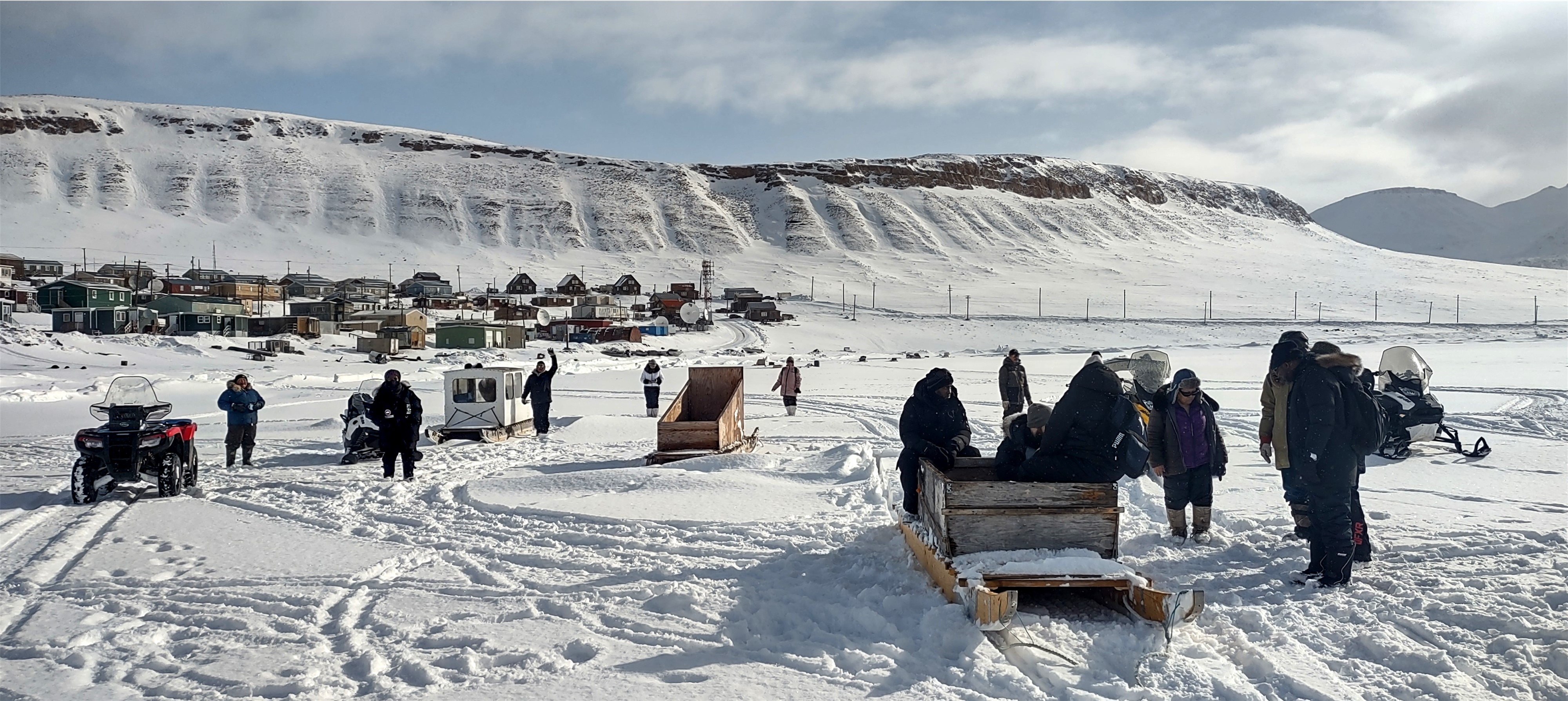
headed down to the ice at 9:30am, bringing everything they would need for the
day. They also carried supplies and
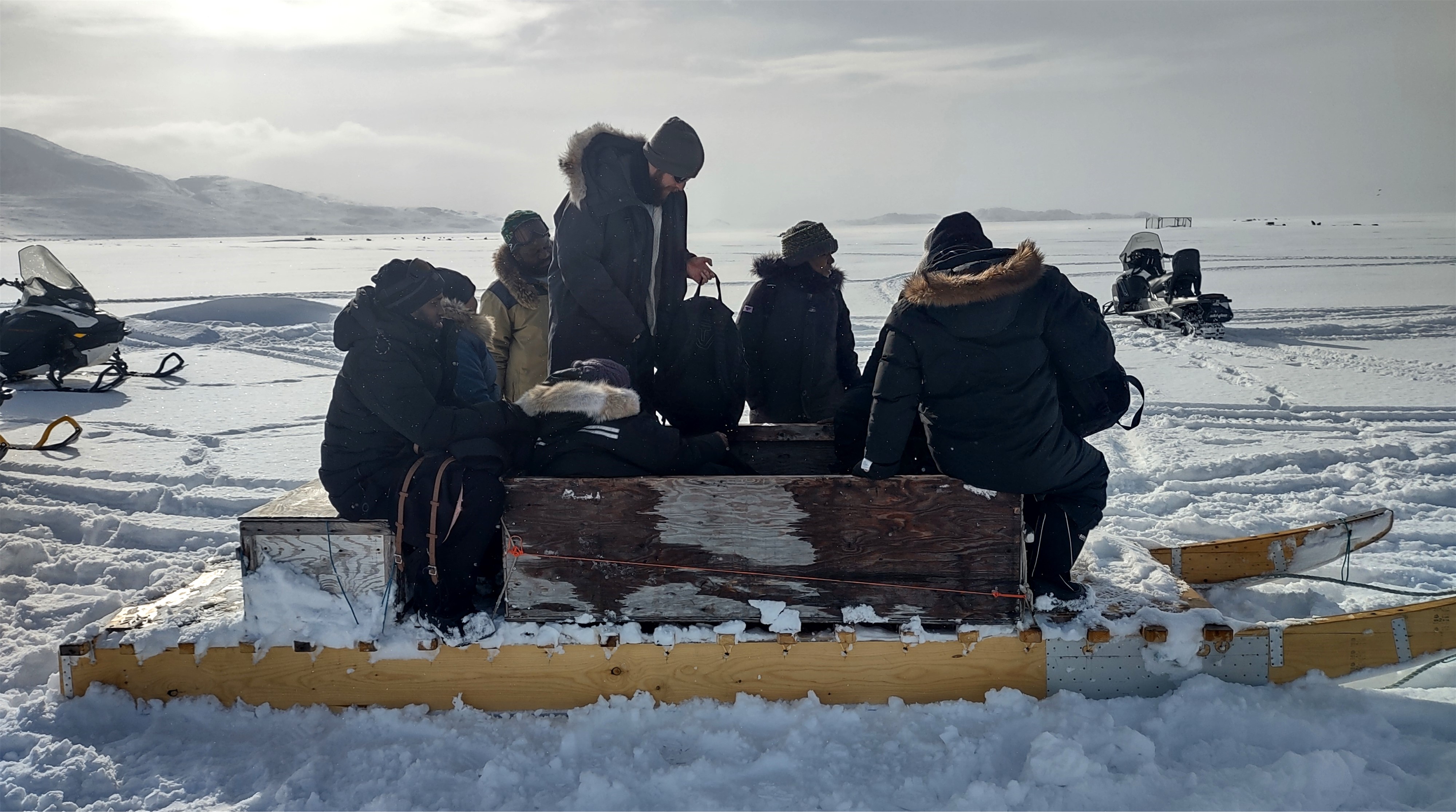
loaded them into six qamutiks. I brought
my own skidoo. We did a quick head count
and then the convoy left at 9:45am.
I
followed the convoy but then sped ahead to take pictures of them passing by. Staff & drivers waved at the camera. The camp site was Pattaataliarusiq, about 12km
southeast of Arctic Bay. This location
has been used for previous spring camps.
It’s far enough to be considered out on the land, but close enough to
the community in case there’s a medical emergency.
Staff
helped the drivers unload supplies and put up the white tents. The tents were already there but lowered to
the ground to prevent them from being blown away. There were supplies underneath, so at first,
I thought these supplies were covered by white tarps. Instead, staff lifted wooden beams and the
tents “magically” sprung up from the ground.
Good camouflage on display.
Washroom
facilities are always a concern when camping.
In the past, an igloo without a roof was built or a tent with a bucket inside
was declared the washroom tent. This
year, the drivers brought a wooden outhouse.
The toilet consisted of a bucket with a garbage bag.
A
high school graduate (HSG) was hired to provide dog sled rides for Spring Camp. He’s been running his own team for a few
years now. Several staff members & I
got to experience being pulled by sled dogs before lunch.
A
driver drove a skidoo pulling a qamutik.
The HSG sat on the back of the qamutik coaxing the sled dogs to follow
at a slow pace. If you’re on the sled
being pulled, you have to be ready to throw the metal anchor off to the side to
signal the dogs to stop running.
I
must admit this was my first-time dog sledding and the dogs did very well. They didn’t run off and I didn’t fall off. We didn’t go too far from the camp site; “just
around the corner.” When we came back, lunch
was being served.
The
lunch menu consisted of caribou, hamburgers, hot dogs, granola bars, juice
boxes, and whatever snacks people brought on their own. Two small barbecues and propane tanks were brought
to the campsite and the food was prepared by staff with BBQ experience.
We
went ice fishing at a nearby lake after lunch.
Two drivers drilled a few holes using a motorized ice auger. Watching this is always mesmerizing due to
how many extensions are needed to hit water.
The ice can be up to 9 feet thick so drilling through all that can take
a couple of minutes. The most efficient
way is to have three people: two manning the ice auger while the third shovels the
ice & snow.
Despite
our best efforts, we were unable to catch any fish. But that’s the way it goes sometimes. What I would like to do one day is buy/rent an
underwater camera designed for finding & tracking fish and film several
videos of Arctic char swimming around. I
could also use it to film seals. I have
GoPro cameras, but I’d have to attach them to the end of a long stick. I’m also hesitant to do that because if the
camera(s) detach from the stick, they’re gone forever.
Everyone
returned to camp at 2:30pm for a little down time and snacks. The cleanup / teardown of the camp began at
3pm. Everything was packed onto qamutiks
except for the wooden outhouse. The
leftover food was divided amongst the staff, Elders, and drivers. I didn’t take any. We left Pattaataliarusiq at around
3:30pm. We arrived in Arctic Bay at
3:45pm.
Overall,
the day trip was fun and a nice way for staff to enjoy the outdoors without
students. Yes, even teachers need a
break. Hopefully we’ll go seal hunting
next year.