Wednesday, September 7, 2016

Late Sealift, Early Snow


The annual sealift was late this year because of heavy ice conditions, lack of heavy icebreakers, and the grounding of the Anna Desgagnés on July 3.  The large M/V vessel got stuck in the St. Lawrence River near Montreal but thankfully, the ship was not seriously damaged.  The container ship was towed back to Montreal, inspected, and then sent out again on July 5.  The vessel, like many others that sail up north, delivers much needed supplies to communities in Nunavut & Nunavik.  The Anna Degagnés arrived in Arctic Bay on August 31.  The CCGS Henry Larsen was escorting her.  The second sealift vessel, MV Umiavut, arrived on September 5.  Only the "gas boat" arrived on time to replenish the large fuel silos at the community's Gas Station.
            
CCGS Henry Larsen.
The heavy ice conditions and lack of heavy icebreakers are common complaints that are voiced every year.  When a sealift vessel gets stuck in the ice, they have to contact and wait for a coast guard icebreaker to create a safe passage.  Unfortunately, there aren't enough icebreakers to deal with the high volume of sealift vessels.  Quite a few vessels got stuck in Ungava Bay and in the southern Hudson Bay this year.  They were forced to wait several days until the coast guard could free them.     

The federal government needs to investment more money, resources, and time in arctic development.  None of the northern communities have deep sea ports.  This makes the annual sealift a tricky & time-consuming business.  So far, only Iqaluit is slated to receive a deep sea docking facility in the near future.  This is nowhere near enough.  I suppose the sealift companies could help by building container ships that also act as icebreakers but I don't think they're ready to spend the money.
            
Building materials for two fiveplexes
that are to be built this year.
The annual sealift is a "Second Christmas".  Tons of supplies - food, vehicles, building materials, personal items - are offloaded and delivered to giddy & excited customers.  There is a lot of noise & activity when the ships are in town.  A makeshift "dock" is created in front of the Northern store.  Tugboats use a barge to bring several loaders and a small office ashore.  The office, which really is a small sea container, is used to collect delivery payments.  The tugboats then ferry the barges back and forth, bringing containers and crates ashore.  The loaders then drive around town, delivering sea containers and large wooden crates.  The Northern and Co-op stores hire locals to empty the containers and place all the delivered products in their warehouses.  English, Inuktitut, & French signs were posted outside the Northern Store, warning children not to play in the area.    
            
A loader driver catches a quick nap
at lunchtime.
The weather limits the shipping season to the brief summer months.  Since the boats only arrive once a year, customers do their best to buy supplies that will last them until the next sealift and/or beyond.  There are businesses that can help you with your sealift order, including the Northern & Co-op stores.  You can buy or rent a sea container if you need that much space, or you can pay to have your supplies crated in wood.  Just make sure you have a crowbar ready when the crate arrives.     
            
Several southern teachers & I participated in this year's sealift by purchasing space in JF's sea container.  (This was my first time doing a sealift).  We all did the best we could, but in the end, we didn't fill the entire container.  When I saw the inside of the container, I concluded that I should have bought much more.  Perhaps three times as much.  My contributions were dried goods, school supplies, and cadet supplies.  JF got his daughter to paint the exterior of the container so that it would be easy to identify.  The shipping cost alone was $6,000 CAD.  JF's container was onboard the Anna Desgagnés.  Unpacking and reorganizing everything in my apartment took some time.
            
Inuujaq School's sea container.
The school's sealift was onboard the MV Umiavut.  The blue sea container and two large wooden crates were dropped off in front of the school.  The principal hired several local Inuit to help him bring everything inside over the September 3 - 4 weekend.  Boxes and boxes of stuff lined the main hallway when I walked into the school on the morning of September 5.  I dropped everything in my classroom and took pictures of all the boxes.  I looked forward to receiving the school supplies I ordered before the summer break.
            

Before sealift.

Before sealift.
The last, but also important, thing that happens after the annual sealift is the small decrease in the cost of living.  It's cheaper for the Northern & Co-op stores to order & receive products by boat.  Several months before the sealift, prices go up because the stores exhaust their previous "sealift stock" and must rely on air travel to deliver food and other vital products.  Unfortunately, this drives the cost up.  I secretly walked around the Northern Store in late August and photographed some of the outrageous prices that the people of Arctic Bay had to put up with over the summer.  The most well-known example I have given in the past is that a can of (soda) pop can cost as much as $6 prior to the annual sealift.  The price usually drops to about $2.50 a can.  Everyone was glad that the prices came down, although, they are still very high compared to down south.
            
Before sealift.
September 5, 2016
I think what surprised everyone the most was to see snow falling on the community in early September.  Usually, snow falls on the surrounding mountains first, some time passes, and then snow falls on the community.  This year, however, the period between the snowfalls was really, really, short.  We all woke up on the morning of September 5th to see several inches of snow on the ground.  The skidoos would be out early this year.
            
HMCS Shawinigan
HMCS Shawinigan sailed into Arctic Bay on September 6th.  The crew had recently finished participating in Operation Nanook.  They would be joining the CCGS Sir Wilfred Laurier in the coming days to conduct archeological surveying of the HMS Erebus and search for the lost HMS Terror.  The Erebus & Terror were two vessels that were lost in 1845 during the ill-fated Franklin Expedition.  The crew only had enough time to spend a day in Arctic Bay. 
            
The captain and several of his crew members came ashore and paid a visit to Inuujaq School.  They arrived during afternoon recess when I was on recess duty.  I greeted the captain and his visiting crew before they were escorted to JF's classroom.  An afternoon presentation to the high school students had been planned.  Sarah & her Grade 9 class were invited.
            
The principal introduces the captain of the HMCS Shawinigan
The principal introduced the captain of the HMCS Shawinigan.  At lunchtime, the principal, mayor, cadet, and a member of the youth committee were given a tour of the vessel.  The captain and his crew explained what type of vessel the Shawinigan is - Kingston-class coastal defence - the type of operations they conduct, and why they were in the north.  The students were interested in the pictures that were shown, especially the ones where the crew members are operating the .50 caliber machine guns.  They were also intrigued by the anti-drug operations the ship conducted in the Caribbean Sea last year.  The captain also explained the benefits of working in the Canadian navy, the average pay, and how to sign up.  He did stress that applicants need to have at least a high school education. 
            
The presentation concluded at the end of the school day.  The ship left later that evening.

Wednesday, August 31, 2016

JF Returns, Beach Clean Up, & EA Consultations


JF returned from the Rio Olympics on August 24, but didn't begin teaching until the 25th.  The plane landed in the community in the late afternoon, well after the conclusion of the school day.  He must have been tired from all the travelling.  He was originally scheduled to come back on the 22nd, but there were delays.  When I saw him at school on the morning of August 25th, he was wearing his bright yellow & orange volunteer clothing, with a matching ball cap.  I shook his hand and welcomed him back to the north. 
            
The 2016 Summer Olympics in Rio were alright for Canada, (I guess), but the Games showed that Canada isn't that strong when it comes to summer sports.  We came in 20th place, with a total medal count of 22: 4 gold, 3, silver, and 15 bronze.  As the Royal Canadian Air Farce would say, our athletes really went for the bronze this year!  I hope our paralympions will do better in September.  I kept up with the Games by reading online news articles; I didn't watch the events because I don't have a tv.
            
I asked JF what it was like in Rio?  He replied: 
            
"Being a volunteer at the Rio 2016 Summer Olympics was incredible.  I got to experience a very different culture, learn some Portuguese, [and] taste the local specialties.  My personal favourites: Pão de queijo, Churrasco, Feijoada and Caipirinha.
            
"I met people from many different countries who were also volunteering at the Games (India, Sweden, Columbia, Hong Kong, Holland, Estonia, Great Britain).  I also went to some sporting competitions, (women's basketball, field hockey, modern pentathlon, slalom canoe and kayak, handball, track & field, beach volleyball), where I met tourists from all over the world!
            
"Rio is a very big city with 6 million people.  I noticed there was graffiti everywhere and the Cariocas, (people who live in Rio), are very nice, like to dance, and have a good time drinking beer!"
            
JF also mentioned that he was already thinking about organizing an Olympic school activity in the very near future.  More on this in a future post.
            

I got up early on Saturday, August 27 and was driven to the Uquutaq Centre by Civilian Instructor (CI) A. Reid.  (The Centre is the local Anglican Church).  Today was the annual cadet beach clean up, and everyone had been instructed to meet at the church for breakfast & briefing at 9am.  We arrived at the centre after 8:30am.  The adult cooks were already in the kitchen preparing breakfast.  The main course was sandwiches made with eggs, ham, cheese, bacon, and bread.  They resembled Egg McMuffins from McDonald's, but tasted better.  For drinks, there were juice boxes.  The cadets slowly trickled in after 9am and helped themselves to breakfast.  We all ate at least two sandwiches each.  Nothing beats homemade breakfast.
            

Once everyone had enough to eat, I briefed the cadets on the area we would be cleaning.  For the last several years, 3045 Army Cadets has been cleaning the beach area behind the local airport.  This year, we would be cleaning a section of coastline along the road that leads to the local airport.  We were told that a lot of garbage had accumulated there and something needed to be done.  The cadets & supplies were transported to the area via pickup trucks, atv, and side-by-side.  The atv pulled a trailer that we would use to collect the garbage and transport it to the dump.  I led the small convoy, driving the pickup truck.                
            
CI Reid & I recruited two cadets to assist us in collecting all the necessary supplies for the clean up activity several days in advance.  We bought garbage bags, juice boxes, and granola bars from the local Co-op store, and got Meals-Ready-to-Eat (MREs), Coleman stoves, and a first aid kit from the cadet storage unit at the Gas Station.  The Health Centre staff donated a box of plastic gloves.  The recruited cadets checked the Coleman stoves to make sure they worked.
            
We all put on plastic gloves and grabbed several black garbage bags.  We then went to work, seeking out and picking up items that weren't supposed to be lying on the ground.  Very large items, (including discarded wood), were to be gathered into large piles and then loaded onto the trailer.  The area was littered with large rocks but there were some patches of green grass.  The skies were clear but there was a cold wind blowing.
            

No, those aren't rocks. They're
garbage bags.
As I have been saying since 2013, it always amazes me what kind of garbage, or treasures, we find out on the land near the community.  The wind and water carry these discarded items, small & large, across the bay where they come to rest on the beach and/or get stuck in the rocks.  It didn't take long for our garbage bags to become full of chip bags, pop cans, plastic bags, small toys, torn up mitts, shoes, and plastic oil cans.  The larger items we collected were rusted oil drums, tires, tricycles, Rubbermaid coolers, and large pieces of wood.  It took several trips to the dump to offload everything we collected.
            
We used up all the garbage bags we bought.  We could have kept going but the afternoon had arrived and I could see the cadets were tired.  The cadets posed for a group photograph before they were driven home.


Three delegates from the Nunavut Government arrived in Arctic Bay to hold a public meeting on the evening of August 30th.  The meeting took place in the school's gym and the delegates were looking for public input on the proposed changes to the Nunavut Education Act.  The last time the act was amended/changed was in 2008.  The act was reviewed in 2015 and some recommendations were made.  Some of the proposed changes include: a standardized school calendar for the territory, better communication of the needs of students, and extending the deadline to develop curriculum resources in Inuktut. 
            
A year or two after I began my Nunavut teaching career in 2012, Nunavummiut learned that the territory's education system would not be able to meet the government's goal of creating a fully bilingual (English-Inuktitut) system in 2019.  At the time, the reasoning was there wouldn't be enough trained Inuit teachers/principals by then, but people were saying that there were other reasons, as well.  Some pointed to the Education Act itself, saying it needed to be amended, and/or changed again to fit the needs of the Inuit.  (When Nunavut became a territory in 1999, the Act was an exact copy of the Northwest-Territories Education Act.  The process of changing the Act to fit Inuit values began several years later, with the first revision in 2008).
            
The gym was set up with tables and chairs.  The setup only occupied half of the gym.  The food was prepared by Sarah & her Grade 9 class.  They did a really good job.  The delegates provided documents, pamphlets, and USB sticks that explained the proposed changes to the Act.  The information was produced in English and Inuktitut syllabics.  There were also listening devices for everyone because the consultation would be conducted in English & Inuktitut.  Local Arctic Bay resident, Mishak Allurut, was hired as the translator.      
            
The delegates began the consultation by introducing themselves.  The audience consisted of elders, community members, the principal of Inuujaq School, and several teachers.  I was also in attendance.  The format of the meeting was straightforward: the delegates would introduce the proposed change to the act and then people in the audience were invited to give their opinions & suggestions.  Everyone spoke with a microphone.  I refrained from speaking; I was mostly interested in what other people had to say. 
            
A lot of opinions & suggestions were made, too many to list in this post.  Some of them were that many wanted more resources produced in Inuktitut, better communication between the government and the school boards, and more trained specialists in special education & language.  The idea of a standardized school calendar had a mixed reception.
          
I didn't stay for the whole meeting because I had lessons to prepare & work to correct.  I heard the meeting lasted until 10:30pm.  The only issue I had with the meeting was that not many people showed up and that the delegates were leaving the next day.  I know we live in a world of tight schedules, but there should have been at least two days of consultations.  (The delegates were visiting several communities; not just Arctic Bay).  I hope the information collected will be considered and used.
       

Saturday, August 20, 2016

The First Few Days


August 15, 2016.  The first day of school.
            
The staff arrived in the early morning to prepare the food for the community breakfast the school puts on every year.  We also had to set up the gym where the opening ceremony would take place.  Naturally, I arrived in my formal attire, wearing a dark collared shirt, a sealskin tie, black dress pants, and black dress shoes.  I was ready to teach.
            

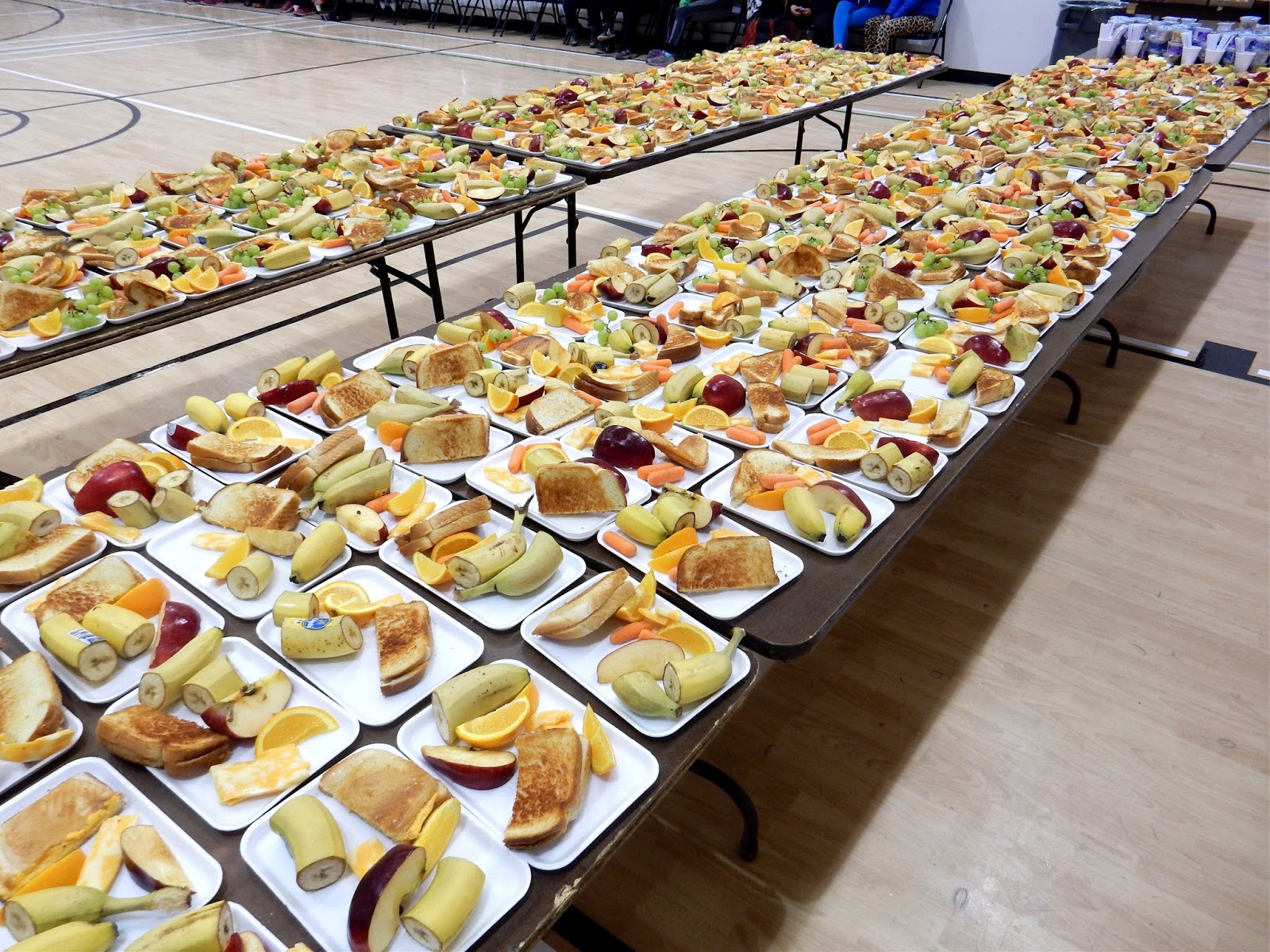
The Home Ec room was alive with activity.  Teachers were preparing bowls of freshly cut fruits and trays of grilled cheese sandwiches.  I helped several teachers set up the gym with tables and chairs.  The gym had been repainted and coloured lines had been added to the floor.  The repainting of the school over the summer gave me the feeling of a new beginning.  I wondered if others felt the same way.  The high school students came down to the gym to help the teachers prepare plates of food.  We prepared close to three hundred plates before 9:30am.  We would also be serving yogurt, juice, coffee, and tea.


The gym was full of students, teachers, parents, and community members.  The emcees were the principal and Audrey, the school's sewing teacher.  The staff were called up to the front to introduce themselves and say what subjects they would be teaching.  I was one of the first.  An elder then blessed the food and the staff began handing out the plates of food to everyone.  We started from the front of the gym and worked our way to the back.  The plates quickly disappeared into the audience and after some time, most of the food was consumed.  Many people came up for seconds.  The breakfast lasted until morning recess.  We made sure the gym was cleaned up before the bell rang.
            

I would be teaching three classes this semester: Grades 10 & 11 Social Studies and Grade 10 Percussion.  Grade 10 Social Studies was the largest class and my drum class would be the smallest.  This semester I would be teaching an all-girl drumline.  This arrangement wasn't planned; it just happened.  This was my first time teaching percussion to just girls.  Last semester, my guitarists were all girls. 
            
I spent most of the first week introducing myself, going over the course outlines, and outlining the rules of the classroom.  I began teaching near the end of the week.  My Grade 10 Socials students began their study of the Canadian Residential School System.  My Grade 11s began their semester learning about globalization.  And my drummers learned stick grips, proper posture, how to hit the drum pads, and some basic rudiments.
            

A large private yacht anchored in Arctic Bay for several days.  Using my binoculars, the flag on the stern looked like it was from Ontario.  Unfortunately, I didn't meet any of the crew members to confirm my assumption.  They blew the boat's horn before sailing out of the bay.
            

A large cruise ship called the Ocean Endeavour sailed into Arctic Bay on August 17th.  A small fleet of zodiac boats, full of curious & excited tourists, came ashore.  I thought the tourists would come ashore wearing yellow jackets like they did two years ago but that wasn't the case.  It was still easy to spot them, walking around, snapping photos of everything & everyone.  Some even took pictures of Inuit women carrying babies in their amautis.  The tourists only stayed for the day.  The zodiac boats brought them back to the ship and Ocean Endeavour left that night.

Monday, August 15, 2016

The 4th Return

The summer of 2016 was good but short.  It's always surprising to see two months just fly by within the "blink of an eye".  I shouldn't complain, though.  There are plenty of professions that do not offer eight weeks of paid vacation.  This summer was about rest & relaxation.  A part of me wanted to visit another country, but all the land trips up north tired me out.  Sometimes it's good to just stay home and do nothing . . . until you can't stand it anymore and have to step outside.
            
I spent the majority of my summer in my hometown of Ottawa, but I did some travelling.  The "high point" of my summer, figuratively & literally, was when I completed the CN Tower EdgeWalk  in Toronto for the sixth time.  I'm quite the veteran.  The experience is a great way to see the entire city and to rid yourself of acrophobia.  The weather was hot but the skies were clear.  I could see the buildings that make up downtown Niagara Falls!  (Niagara Falls is 127km south of Toronto).  I stayed in Toronto for Canada Day (July 1) and filmed the celebratory fireworks at the Harbourfront Centre (Part 1 & Part 2).
            
As the month of July came to a close, I began the usual preparations for the return flight to Arctic Bay.  The fridge in my apartment was bare and needed to be restocked.  Two boxes of perishable & frozen foods were packed.  They would be my excess baggage on the flight.  I had prepared several other boxes to ship up north but they were placed inside a large sea container in Montreal.  The container would be shipped to Arctic Bay by boat, arriving in late August.  The container actually belonged to JF, the high school math & sciences teacher.  He offered space on his container, (for a price), to the teachers of Inuujaq School, if they wanted to ship goods from the south by boat.  (You save money if you do a sealift order but you have to order bulk items.  And you also save money if you do a sealift order with a group of people).  Several of us accepted JF's offer and we filled the container as best as we could.  The container was transferred to the Montreal dock before JF left for Rio.
            
Source: Forbes.com
JF would be arriving in Arctic Bay a little later than everyone else because he would be in Rio de Janeiro for the Summer Olympics as a volunteer.  He would be one of many Canadian volunteers, but probably the only one representing the territory of Nunavut.  He made sure to pack a Nunavut flag.  JF was a volunteer at the 2010 Winter Olympics in Vancouver.  We all envied him; he was on a trip of a lifetime.  He promised to take many pictures and bring back a lot of stories of his travels.
            
The fourth return began on Monday, August 8th.  The first three-hour flight was to Iqaluit.  Upon landing in Nunavut's capital, there was enough time for me to grab a shawarma from the Yummy Shawarma & Pizza restaurant down the road.  The airport's security area was closed off because mold was discovered.  A temporary security area was created.  I can't wait until the new terminal opens next summer.
           
The flight to Arctic Bay made a brief stop in Hall Beach to refuel.  We were allowed inside the terminal to stretch our legs.  Two of the old DEW Line dishes were still standing next to the airport.  The plane touched down in Arctic Bay in the late afternoon.  The mountainous landscape looked the same.  Frank greeted me at the airport and gave me the keys to his pickup truck.  Quite a few people had arrived this time and he would be driving them into town in his minivan.  These included the school principal and a new teacher.  I drove myself, Ryan, and his wife into town, along with all of our belongings.  I was glad my food boxes hadn't been left behind.  I spent the next three hours unpacking and putting my apartment in order.  I returned the pickup truck when I was finished.
            
When I was driving towards the community, I noticed the iceberg had almost completely vanished.  There was just a very small piece of ice floating above the water.  I assumed the remnants would be gone in a day or two.
            

I went to see the newly painted school on Wednesday, August 10.  A couple of people said "Welcome Back!" to me as I walked to the school.  The building's exterior had been repainted with the same colour.  Personally, I would have preferred something more brighter.  The interior walls were painted white.
           
I entered my classroom expecting to see a large empty space, but instead, all the furniture and chairs had been placed exactly according to my established floor plan.  I assumed my students did this because I didn't leave a drawing with the painters.  Thank you.  The old carpet was gone, replaced by beige flooring.  My classroom will be brighter this year.  I spent some time moving my instruments and other items into my classroom before calling it a day.
            
August 11 & 12 were staff days; a chance for everyone to get their classrooms in order and to prepare for the first day of school on Monday, August 15.  A lot of handshakes and greetings were exchanged before everyone gathered for the first staff meeting.  The meeting began with a prayer before the principal welcomed everyone.  The two new teachers, a lady from Igloolik & a lady from Trinidad, were introduced.  Class schedules were handed out and the principal explained what was to happen on Monday.  We spent the next two days preparing for Monday.  By the end of Friday, I was ready for the first day of school.
            
New health centre.
The construction of the new health centre is coming along.  The exterior looks nearly complete and has been painted blue.  I'm not sure about the interior because I'm not allowed on site, but I can only assume that things are moving forward.


KGVM & Gas Station.
Arctic Bay. August 14, 2016.
On Sunday, August 14, community members and Inuujaq School staff gathered at Uluksaan Point to mark the start of the academic year.  The afternoon event was organized by the local Anglican Church.  I started walking towards the meeting area, taking pictures of King George V Mountain (KGVM) & Arctic Bay.  I know I already have too many pictures of them, but the water in the bay was very reflective and the sunlight was perfect.  I made it just past the cemetery when Paulette pulled up on her atv and gave me a ride the rest of the way.  Paulette is the high school arts & English teacher.
            
Hidden berry pickers.
There were a few people already at the point when we arrived.  Some had gone berry picking in the nearby hills.  A convoy of pickup trucks, atvs, and even the school bus arrived en masse several minutes after my arrival.  The point was alive with people.  Speakers, a keyboard, and several microphones were set up.  A small generator provided electricity.  When the berry pickers came back, the ceremony began.
            

The emcees were Rev. Leah May and Sam Willie.  They called each staff member to the front and introduced us to the audience.  We then sang two hymns in Inuktitut & English.  The ceremony concluded with the blessing of the food, brought by community members.
            
Cooked seal meat.

The food was cooked on Coleman stoves and over small open fires.  I was offered a large piece of cooked seal and some bannock.  The seal was quite good except there was too much fat attached to the meat.  I discarded the fat, leaving it to the birds.  When I was done with my meal, I took pictures of the large gathering and surrounding landscape.  Two people on a boat happened to be speeding by when I had my camera out.  I was able to snap a picture of them with the large pyramid looking mountain in the background.  They were most likely heading out fishing and/or hunting.


Frank gave me a lift to the school so that I could do a last minute check on my classroom.  The furniture and posters were in their proper places.  My lesson plans were ready.  I was ready.